Haolun Wu 吳昊倫
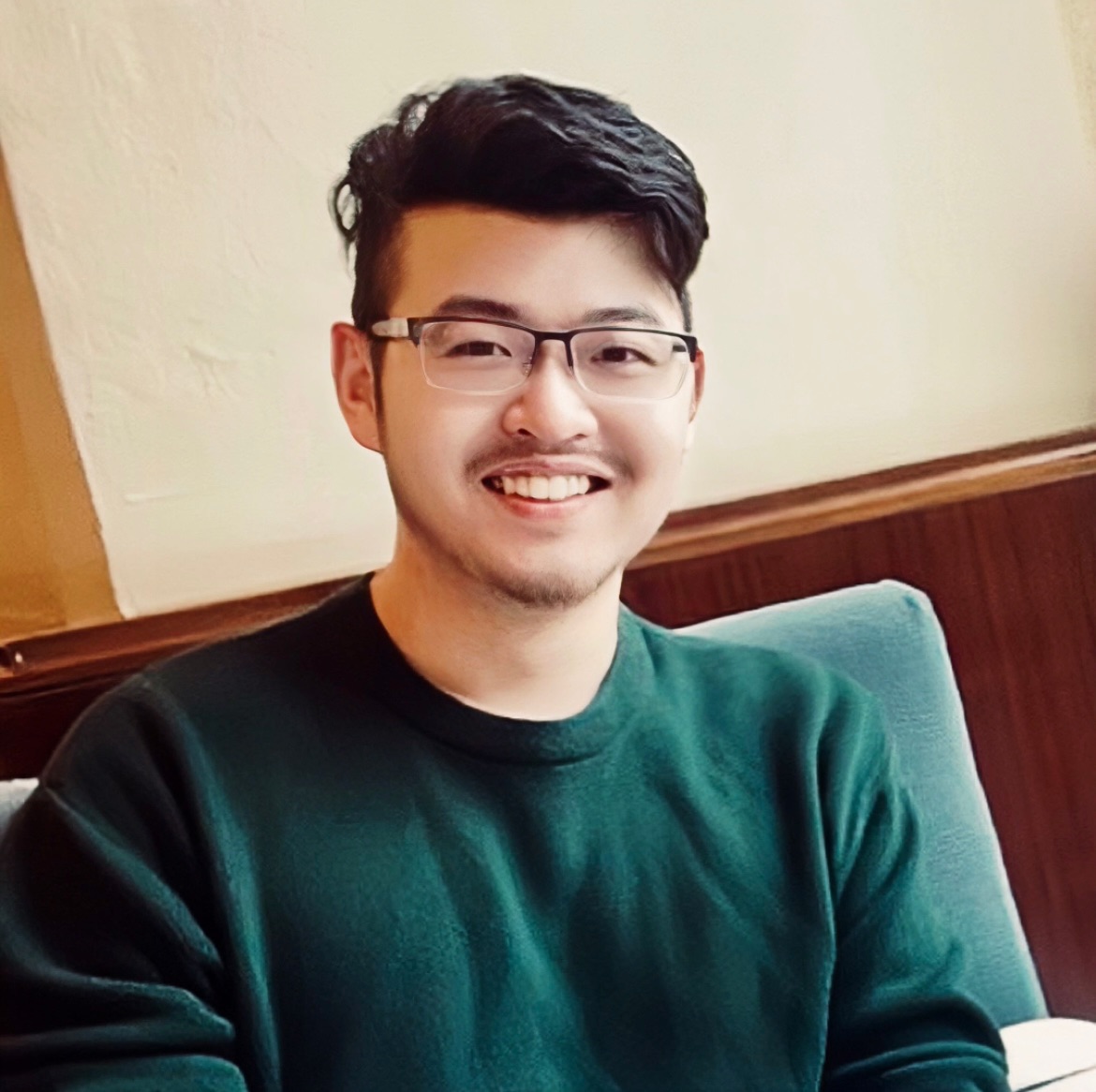
I am a Ph.D. candidate in Computer Science at McGill University and Mila - Quebec AI Institute. I am delighted in working with Steve Liu and Fernando Diaz. I also collaborate with Laurent Charlin and Joelle Pineau and have them on my supervisory committee. In 2025, I was a visiting scholar at Stanford Trustworthy AI Research (STAIR) Lab led by Sanmi Koyejo working on trustworthy foundation models, compound AI system alignment, LLMs for personalized adaption, and LLMs for education.
My research centers on learning from human feedback using ML techniques to make AI systems trustworthy, responsible, and align with human needs. My work on human-AI alignment spans both micro-level aspects (such as personalization and data values) and macro-level aspects (such as social goods and norms). Additionally, I love interdisciplinary research and am particularly interested in applying AI/ML techniques to Education and Psychology. Additionally, I am one of the organizers of the OracleLLM community, where we dive into the frontier of using LLMs as oracles—trusted agents capable of providing reliable, high-level insights. I am also a member of the organizing committee for NICE (NLP Academic Exchange Platform), a large community for NLP researchers to share their work and ideas. We organize events in both Mandarin and English. Feel free to reach out and fill this form if you would like to present your research or engage with our community.
During my Ph.D. journey, I interned and collaborated closely with researchers at Microsoft Research, Samsung AI Research, Google Research, and Google DeepMind. My research is generously supported by McGill Graduate Excellence Award, Microsoft Research & Mila Research Grant (twice), MITACS Accelerate Fellowship, Borealis AI Fellowship, Samsung Global Research Outreach Grant, and FRQNT PhD Scholarship (ranked 1st place).
Past and present research topics include but not limited to:
Machine Learning from Human Feedback. I focus on the fundamental challenge of aligning AI with complex human intent by developing probabilistic and adaptive frameworks that learn from implicit, noisy, or ambiguous feedback. I pioneered DUR to model user preferences as distributions rather than static points, and IMCAT to disentangle multi-faceted intents via contrastive learning. To ensure robust alignment, I frame LLM adaptation as a label noise correction problem in Plugin and developed the TIL mechanism to reweight noisy training samples based on informativeness. Additionally, I design metrics like GA-SS to quantify search success and satisfaction across diverse user groups.
Trustworthy AI and Responsible Systems. I address the critical need for AI systems that are fair, transparent, and safe at a societal scale. Moving beyond isolated models, I view alignment as a multi-stakeholder challenge involving users, creators, and platforms. I developed multi-objective optimization frameworks such as Multi-FR to achieve Pareto-efficient fairness and JMEFairness to mitigate exposure bias. To enhance trust, I focus on scrutability, creating transparent, natural-language user representations via TEARS. Recently, I worked on System-level DPO to align compound AI systems, ensuring safety properties emerge from component interactions.
Knowledge Extraction and Reasoning. My research advances the reliability and reasoning capabilities of Foundation Models by grounding them in structured knowledge. I investigate methods like MuSEE, enabling LLMs to function as reliable knowledge extraction and knowledge base construction tools. I also explore the intersection of graphs and learning, integrating knowledge graphs via hyperbolic embeddings in Hyper-Know, and capturing sequential dynamics through Diffusion-based Contrastive Learning. I further define the frontiers of efficient and adaptive inference through comprehensive research on Geometric Knowledge Distillation, Retrieval-Augmented Generation, and Test-Time Scaling.
Human-centered AI in Education and Collaboration. I build intelligent systems that scaffold learning and collaboration in high-stakes environments. I developed SSRLBot, an LLM-based agent that uses socially shared regulation to guide medical team diagnostics. I ground these systems in multimodal analysis, examining how facial expressions reveal distinct novice-expert patterns and utilizing physiological signals to identify critical moments in team decision-making. Additionally, I show how social annotations foster psychological safety in collaborative reading. Beyond education, I investigate Multi-Agent Debate and hierarchical frameworks like PartnerMAS to enable cooperative and transparent reasoning.
🚀 New Research Alert: Logits are All We Need to Adapt Closed Models…
— Haolun Wu (@Haolun_Wu0203) March 4, 2025
Very happy my intern work @GoogleAI accepted to #NeurIPS2024 @NeurIPSConf
— Haolun Wu (@Haolun_Wu0203) September 26, 2024
We use Gaussian Process for user modeling to capture multiple interests in an elegant way.
Grateful to my collaborators and mentors @MeshiOfer @masrour_zoghi, @841io, Steve, @Maryam_kar, @CraigBoutilier
My second @MSFTResearch x @Mila_Quebec collaboration...
— Haolun Wu (@Haolun_Wu0203) September 21, 2024
News
🎙️ I am honored to be invited by Prof. Tongliang Liu to give a Rising Star talk on the International Symposium on Trustworthy Foundation Models held at MBZUAI.
Two papers on AI for collaborative learning and decision-making in Education have been accepted to AIED 2025.
One paper on LLM adaptation and alignment has been accepted to ICML 2025.
One paper on Offline model-based optimization (MBO) has been accepted to TMLR 2025.
One paper on LLM personalization with transparency user autonomy has been accepted to The Web Conf 2025 (acceptance rate: 19.8%).
I started my visiting scholar at Stanford University, working with Prof. Sanmi Koyejo on human-centered AI and LLM personalization.
My intern work at Google Research on density-based user representation for multiple interests has been accepted to NeurIPS 2024.
One paper on knowledge extraction using LLMs has been accepted to EMNLP 2024 main conference (Oral, top 7% of all accepted papers).
One survey paper on LLMs for telecommunications has been accepted to IEEE Communications Surveys and Tutorials 2024 (impact factor: 35.6).
One paper on diffusion-based contrastive learning for sequential recommendation has been accepted to CIKM 2024.
One theoretical paper on group-aware search success is accepted to SIGIR ICTIR 2024.
I am ranked in the 1st-place for the prestigious doctoral research scholarship by the Fonds de recherche du Québec – Nature et Technologies (FRQNT) 🎉.
One survey paper on diversity in search and recommendation is accepted to TKDE 2024.
One interdisciplinary collaboration on using linguistic features to reveal learners' psychological patterns accepted to CHI 2024.
One paper on knowledge distillation accepted to ICLR 2024.
I have the honor of being elected as a Lab Representative at Mila, proudly representing the McGill PhD cohort.
I am selected as one of the 10 recipients of the Borealis AI Fellowship, which aims to advance world-leading AI research across Canada, guiding exceptional students and helping them achieve their research goals.
I am happy to be a student researcher at Google Research, New York. I am in Cicero's team and doing research on Mixture-of-Experts (MoE) and knowledge storage/modeling.
Our paper on multi-interest recommendation, Coarse-to-Fine Knowledge-Enhanced Multi-Interest Learning Framework for Multi-Behavior Recommendation, has been accepted by ACM TOIS 2023.
I start my second MSR x Mila research collaboration with the Alexandria team at MSR Cambridge, UK.
I start my research intern at Google Research, Mountain view. I will join Craig Boutitlier's team and do research on multi-interest retrieval in online recommendation systems.
My first (in-person) conference ever! SIGIR 2022 at Madrid 🇪🇸.
I moved to Montreal.